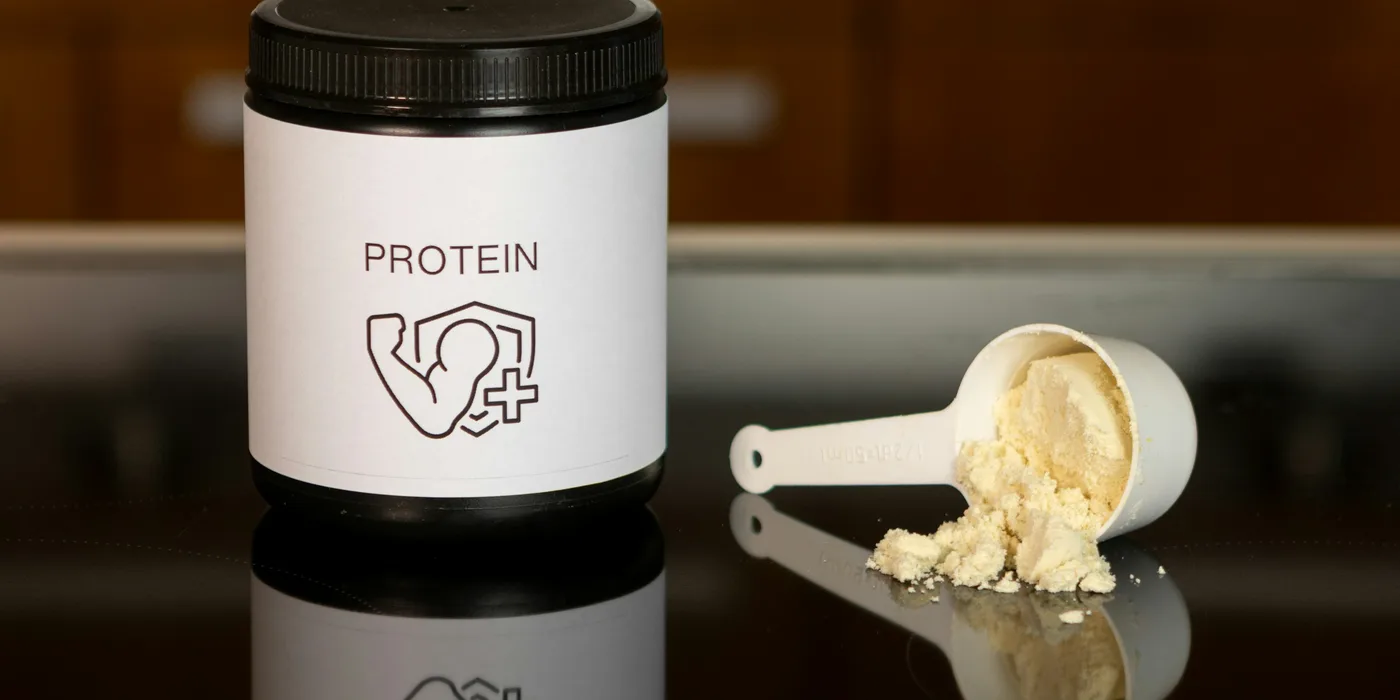
Whey protein and lactose intolerance: isolate vs. concentrate
Post-workout shake, then an hour of regret — sound familiar? Whey powder is made from milk, so it usually carries some lactose. How much depends entirely on which kind you're scooping.
The one-line version: whey concentrate has the most lactose of the common whey types, whey isolate has much less because more of it is filtered out during processing, and hydrolysate or labelled lactose-free products have the least. Most people with lactose intolerance can find a whey product, or an alternative — that sits fine.
Why whey has lactose in the first place
Whey is the liquid left over when milk is turned into cheese. It's literally a dairy byproduct, so unless it's been specifically processed to remove it, the lactose that was in the milk mostly comes along for the ride. That's the whole reason this is worth checking rather than assuming: "protein powder" sounds like a supplement, but it started as milk.
Is whey protein isolate OK if you're lactose intolerant?
This is the version of the question most people are actually asking, and the short answer is that whey protein isolate is the whey type most people with lactose intolerance get on with. Isolate is filtered more heavily than concentrate, which strips out most of the lactose along with most of the fat — typically leaving under a gram per scoop, against roughly 1–5 g for a concentrate.
Two things worth knowing before you assume it's solved. First, "isolate" is not the same claim as "lactose-free." It describes how the protein was filtered, not the amount of lactose left, and that amount still varies between products. If you want a stated number, the label has to say so. Second, everyone's line is different: the gram or so in a scoop of isolate is below the threshold most people notice, but if yours sits lower than that, a hydrolysate, a product labelled lactose-free, or a plant-based protein takes the question off the table entirely.
The type on the label matters more than the brand
The takeaway: two tubs from the same brand can have very different lactose loads depending on whether the label says "concentrate" or "isolate." That one word does more work than the marketing on the front of the tub.
Three ways to actually fix a post-shake reaction
1. Switch to isolate or hydrolysate
If concentrate is the culprit, this is usually the simplest swap — same macro profile, same workout, much less lactose. Plenty of people who react to concentrate have zero issue with isolate.
2. Take a lactase supplement with your shake
A lactase enzyme supplement works the same way here as it does with a glass of milk or a slice of pizza. It supplies the enzyme for the lactose you're about to drink, taken right before the first sip. (The complete guide to how lactase pills work and what to look for on a Canadian label.) It's a reasonable option if you specifically like a concentrate-based product or don't want to switch what you're already using.
3. Go plant-based
Pea, rice, soy, and other plant proteins contain no dairy and therefore no lactose at all: the direct workaround if dairy-derived protein keeps causing problems regardless of type.
Don't confuse this with a milk allergy
If a protein shake ever causes hives, swelling, or trouble breathing — not just digestive discomfort — that's a different situation entirely: a possible milk protein allergy, which involves the immune system and can be dangerous. Lactase enzyme does nothing for that, and it needs a doctor's evaluation, not a different scoop of powder. (The full distinction between lactose intolerance and milk allergy is here.)
For everyday digestive discomfort after a shake, though, this is one of the more fixable dairy problems out there. It's just a matter of reading one word on the label. (More on lactose content across dairy foods generally, including where whey fits in.)
FAQ
Does whey protein powder contain lactose?
Usually yes, but the amount varies a lot by type. Whey concentrate carries the most lactose, whey isolate has much less because more of it is filtered out during processing, and whey hydrolysate and lactose-free/whey protein isolate blends can have very little to none. Check the label rather than assuming.
Is whey protein isolate lactose-free?
Not automatically. "Isolate" describes how heavily the whey was filtered, not the amount of lactose left — it usually means under a gram per scoop, against roughly 1–5 g for a concentrate, but the exact amount still varies between products. Only a product that actually states "lactose-free" is making that claim. For most people with lactose intolerance the amount left in an isolate is low enough not to register; if your threshold is lower, a hydrolysate, a labelled lactose-free whey, or a plant-based protein removes the question entirely.
Can I still use protein powder if I’m lactose intolerant?
Often, yes — many people with lactose intolerance tolerate whey isolate fine, since its lactose content is low. If concentrate causes symptoms, switching to an isolate or hydrolysate, taking a lactase enzyme supplement with your shake, or using a plant-based protein are all reasonable options.
Is casein protein a problem for lactose intolerance?
Casein itself is a milk protein, not lactose, so lactose intolerance doesn’t react to casein directly, but casein protein powders are still dairy-derived and typically contain some lactose, so the same label-checking applies.
Will a lactase supplement work with protein powder?
Yes, in principle — lactase enzyme supplements work on lactose regardless of the food carrying it, so taking one with a lactose-containing shake works the same way it would with a glass of milk: taken right before you drink it.
What should I look for on a protein powder label?
The "type" line (concentrate, isolate, hydrolysate) is the biggest lactose-content clue, followed by the nutrition panel’s sugar content — whey products are mostly sugar-free by design, so any listed sugar is a reasonable proxy for lactose. Some labels also state "lactose-free" directly.
Sources
- NIDDK: Eating, Diet, & Nutrition for Lactose Intolerance (dairy-derived product lactose content)
- StatPearls: Lactose Intolerance (dose-dependent tolerance, processed dairy product variability)
- Health Canada: Food Labelling (reading Canadian nutrition and ingredient labels for sugar/lactose content)
Written and fact-checked by the Lackees editorial team against the sources cited above, following the standards we write by. This article is for general information and isn’t medical advice. It isn’t reviewed by a physician, pharmacist, or registered dietitian. Talk to a healthcare provider about symptoms or before starting any supplement. Lackees is a chewable lactase product that's pre-launch and pending Health Canada Natural Health Product review; nothing here is a claim about an approved or available product.