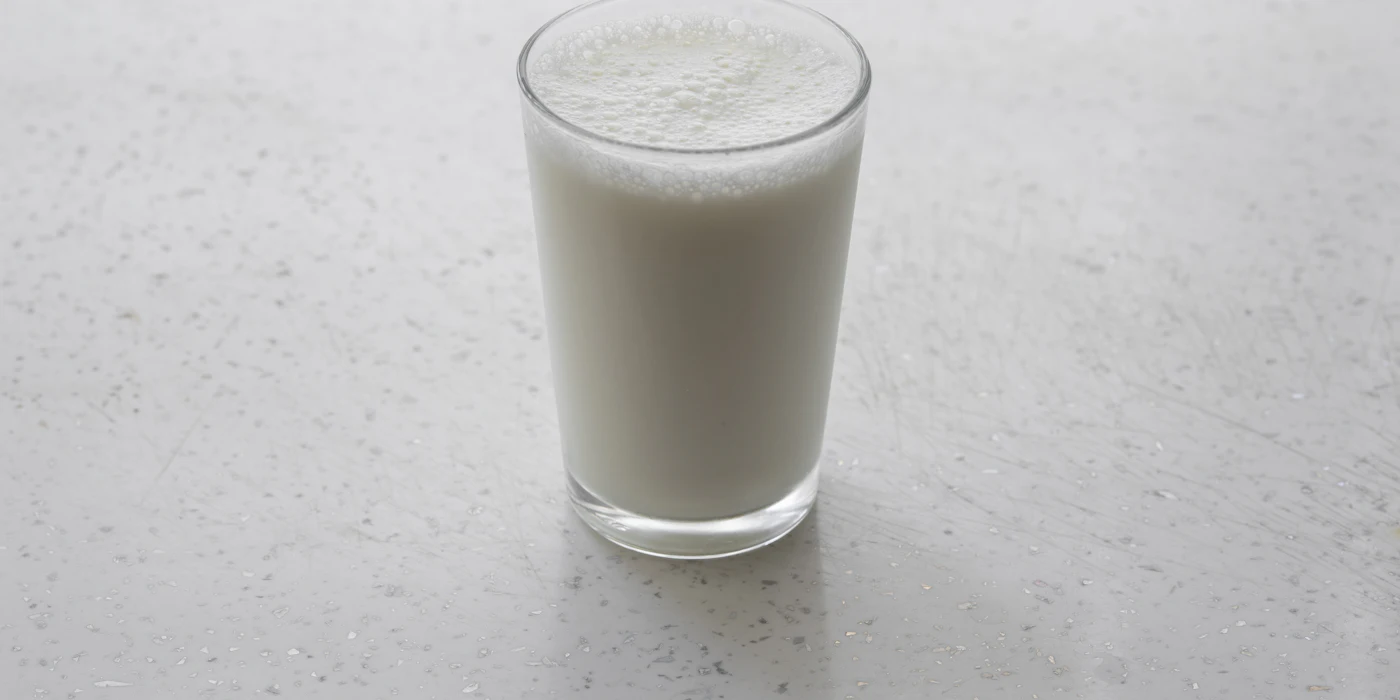
Why am I suddenly lactose intolerant?
Dairy used to be fine. Now it isn’t. Here’s what actually changed — and what you can do about it.
Short answer: you probably didn’t become lactose intolerant overnight: your body has likely been making less lactase, the enzyme that digests dairy’s natural sugar, for years. Most people’s lactase production is programmed to wind down after early childhood. It declines gradually, and at some point it crosses the line where your usual latte or pizza night starts to fight back. That line is what feels sudden.
If that’s you: you’re not broken, and you’re not rare. The US National Institutes of Health estimates about 68% of the world’s population has some degree of lactose malabsorption. Globally, comfortable dairy digestion in adulthood is the exception, not the rule.
The enzyme behind it: lactase
Lactose is the natural sugar in milk and everything made from it. On its own, it’s too big to absorb: your small intestine has to split it first, and the tool for that job is an enzyme called lactase.
Nearly everyone makes plenty of lactase as a baby. But for most of the world’s population, the gene that produces it dials down after early childhood: a well-documented trait called lactase non-persistence. It isn’t damage and it isn’t a disease; it’s the default human setting. The ability to keep making lactase into adulthood (lactase persistence) is the newer evolutionary development, common mainly in populations with a long history of dairy farming, which is why lactose intolerance rates vary so much by ancestry. (The genetics behind that split are their own guide.)
When there isn’t enough lactase to go around, undigested lactose travels on to your colon, where gut bacteria ferment it. That fermentation — gas, bloating, cramps, and an urgent trip to the bathroom, usually 30 minutes to 2 hours after eating — is what people experience as lactose intolerance.
Why it feels sudden when it isn’t
A few things make a slow decline feel like a switch flipped:
1. The decline is gradual, but symptoms have a threshold. Lactase doesn’t disappear all at once. It tapers, often through your teens and twenties. You still digest some lactose; you just digest less each year. Symptoms only show up once the gap between the lactose you eat and the lactase you make gets big enough. Cross that threshold and dairy “suddenly” hurts, even though nothing sudden happened. This is why lactose intolerance so often seems to appear in people’s 20s or 30s.
2. Your dairy habits changed. Moving out, a daily latte habit, a protein-shake phase, more restaurant meals — adult life often quietly increases the lactose load right as your enzyme supply is decreasing. Same body, bigger gap.
3. Something temporarily knocked out your gut lining. Lactase is made in the lining of the small intestine, so anything that irritates that lining can cause secondary lactose intolerance: a stomach bug, food poisoning, some medications, or an underlying condition such as celiac disease or Crohn’s. This version genuinely can appear fast, and it sometimes improves once the gut heals. (How long that recovery usually takes.) If your symptoms arrived abruptly after an illness, or come with red flags like weight loss, blood in your stool, or fever, talk to a doctor — that’s worth ruling out properly rather than self-diagnosing.
It’s not the same as a milk allergy
This distinction matters. Lactose intolerance is a digestion problem: missing enzyme, uncomfortable but not dangerous. A milk allergy is an immune reaction to milk proteins, can involve hives, swelling, or anaphylaxis, and can be life-threatening. Lactase enzymes are only relevant to the first one. They do nothing for a milk allergy. If you’ve ever had allergy-type reactions to dairy, see a doctor or allergist before experimenting with anything on this page.
So what can you actually do?
Lactose intolerance isn’t something you fix — lactase supplements and dietary changes don’t retrain your body. But it’s one of the most manageable food issues there is:
- Learn your threshold. Most people with lactose malabsorption can handle some lactose — research commonly puts a single-sitting tolerance around 12 g (roughly a cup of milk) for many people, especially with food. You may not need to quit dairy; you may just need to know your number.
- Choose lower-lactose dairy. Aged cheeses (cheddar, parmesan) have almost none. Yogurt’s live cultures pre-digest some of theirs. Butter is nearly lactose-free. Lactose-free milk is regular milk with the lactase already added.
- Use a lactase enzyme supplement. These provide the enzyme your body is short on, taken right before the first bite of dairy, so the lactose gets broken down the way it would be if you still made enough lactase yourself. In Canada, look for a licensed product with an NPN (Natural Product Number) on the label and follow its directions. They help only with the dairy you’re eating at that moment; timing is the whole game. (We wrote a complete guide to lactase pills in Canada if you want the details.)
- Mind the calcium. If you do cut dairy back significantly, make sure calcium and vitamin D come from somewhere — fortified alternatives, canned salmon, leafy greens, or a supplement if your doctor suggests one.
When to see a doctor
Self-diagnosing lactose intolerance is common and often correct, but see a healthcare provider if symptoms arrived abruptly without explanation, if avoiding lactose doesn’t help, or if you have red-flag symptoms (weight loss, blood in stool, persistent diarrhea, fever). Celiac disease and IBS in particular are frequently mistaken for lactose intolerance, and hydrogen breath testing can confirm the real story. If you want the full symptom picture first, here’s what’s normal and what isn’t.
FAQ
Can you become lactose intolerant in your 20s?
Yes. It’s one of the most common times for it to surface. Lactase production declines gradually after childhood for most of the world’s population, and the 20s are often when the decline finally outpaces your dairy intake.
Does lactose intolerance go away?
Primary (age-related) lactose intolerance doesn’t reverse — lactase production doesn’t come back. Secondary lactose intolerance, caused by an illness or gut condition, sometimes improves once the underlying issue heals.
Why can I eat cheese but not drink milk?
Lactose content. A glass of milk carries around 12 g of lactose; a serving of aged cheddar has a fraction of a gram. You’re not imagining it — hard cheese really is easier.
Is lactose intolerance an allergy?
No. It’s an enzyme shortfall, not an immune response. Milk allergy is a separate condition, involves milk proteins, and can be dangerous — lactase supplements do not help with it.
Sources
- NIDDK: Definition & Facts for Lactose Intolerance (≈68% global lactose malabsorption estimate)
- NIDDK: Symptoms & Causes of Lactose Intolerance (primary vs. secondary; lactase non-persistence)
- Health Canada: Natural Health Products (NPN licensing)
- Misselwitz et al., Lactose malabsorption and intolerance, Gut (2019) — tolerance thresholds, ~12 g single-dose findings
Written and fact-checked by the Lackees editorial team against the sources cited above, following the standards we write by. This article is for general information and isn’t medical advice. It isn’t reviewed by a physician, pharmacist, or registered dietitian. Talk to a healthcare provider about symptoms or before starting any supplement. Lackees is a chewable lactase product that's pre-launch and pending Health Canada Natural Health Product review; nothing here is a claim about an approved or available product.